Frankie Vogel · 8 November 2026
Shifts in Peer Validation Mechanics During Platform Scaling Phases Within Collaborative Trading Ecosystems
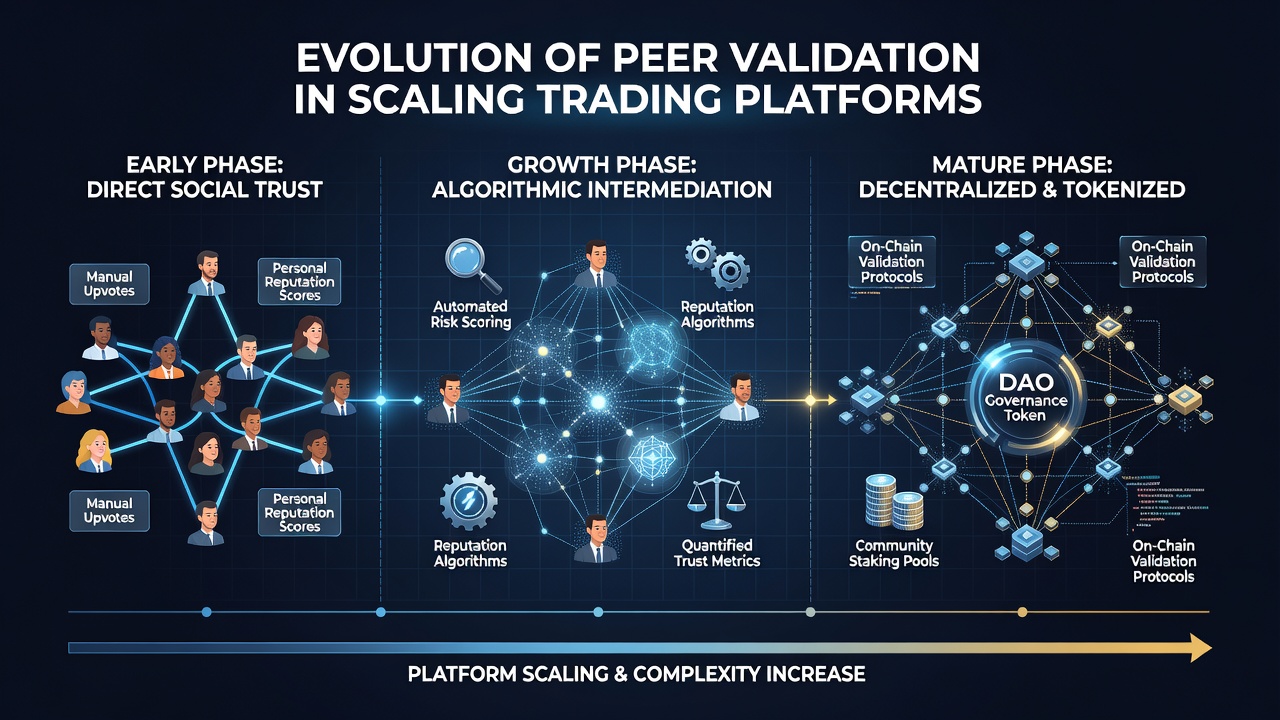
Collaborative trading ecosystems rely on peer validation to confirm transaction legitimacy, assess participant reliability, and maintain network trust while platforms grow from small user groups into larger distributed systems. These mechanics evolve as participant numbers increase, transaction volumes rise, and infrastructure demands shift, prompting adjustments in how endorsements, ratings, and consensus checks operate. Observers note that early-stage validation often depends on direct interactions among limited participants, whereas scaling phases introduce layered processes that incorporate algorithmic filters alongside human input.
Initial Validation Structures in Smaller Ecosystems
Smaller collaborative trading platforms typically feature straightforward peer validation where users directly review and endorse counterparties based on completed trades, shared history, and mutual connections. Data from network analyses show that these systems emphasize manual checks and reputation scores built through repeated interactions, allowing quick consensus among known groups. Yet as user bases expand beyond a few hundred active traders, the volume of transactions creates bottlenecks that require supplementary mechanisms to prevent delays and maintain accuracy.
Researchers tracking platform growth patterns have documented transitions where basic endorsement lists give way to weighted scoring models that factor in transaction size, frequency, and cross-verification from multiple peers. This change becomes evident once daily trade counts exceed thresholds observed in mid-2025 reports from distributed market studies, forcing operators to recalibrate validation rules to handle increased complexity without centralizing control.
Adjustments Triggered by User Base Expansion
Platform scaling introduces new variables that alter peer validation flows, including higher rates of anonymous or pseudonymous participants and greater geographic dispersion among traders. According to findings released by the European Securities and Markets Authority in late 2025, networks experiencing rapid onboarding implemented hybrid validation layers that combine automated anomaly detection with selective peer reviews to flag inconsistencies faster. Those who've examined these shifts report that validation windows shorten as systems prioritize speed, while depth of individual checks varies by trade category and participant history.
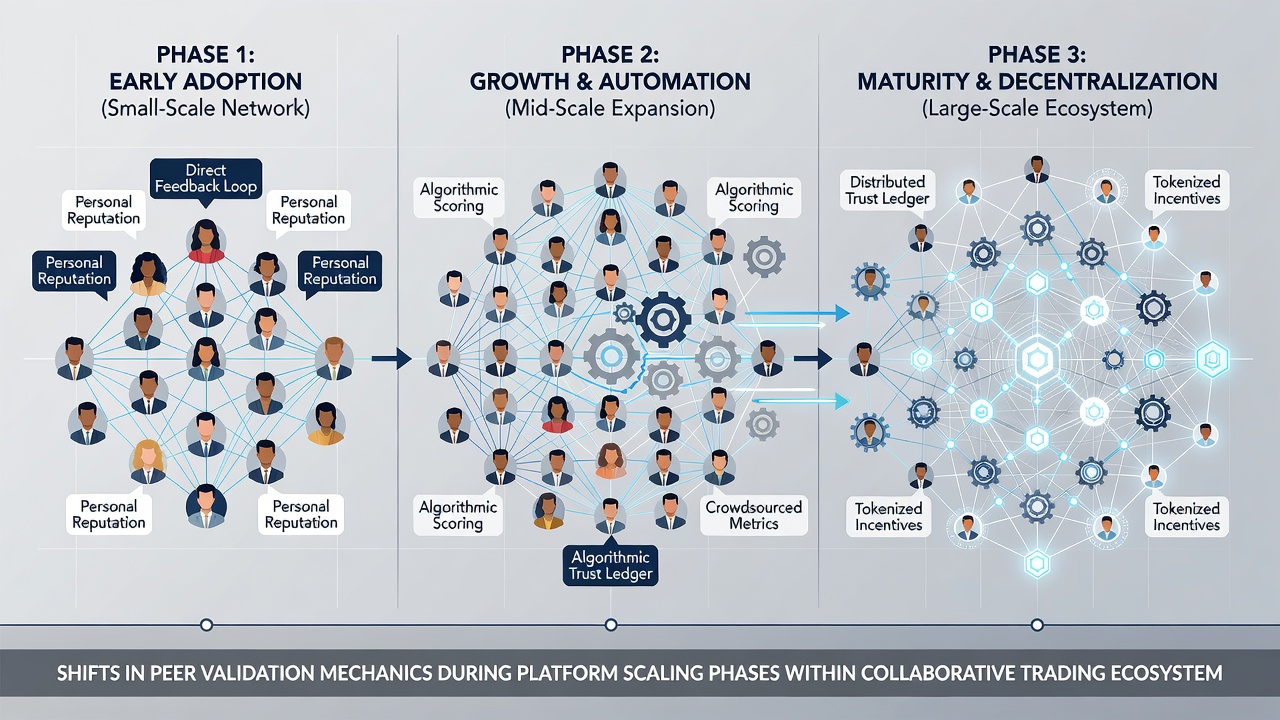
By November 2026, several collaborative ecosystems had rolled out tiered validation protocols that assign different scrutiny levels based on trade volume and network position. One documented case involved a North American platform that integrated feedback loops from regulatory filings with peer signals, allowing validation scores to update dynamically rather than at fixed intervals. This approach reduced processing backlogs while preserving distributed input, though it demanded clearer guidelines on how peer contributions influence overall outcomes.
Role of Algorithmic Integration in Validation Updates
Scaling phases often coincide with greater reliance on algorithmic components that process peer data at volume, turning raw endorsements into aggregated trust metrics. Industry reports from the Australian Securities and Investments Commission highlight instances where platforms adopted machine learning models to weigh historical peer feedback against real-time activity patterns, thereby adjusting validation thresholds automatically during high-traffic periods. Such integrations allow systems to maintain consistency even when participant numbers multiply several times over within months.
What's notable is how these models incorporate safeguards against coordinated feedback attempts, using statistical outliers and cross-referencing with external data sources to stabilize scores. Observers tracking ecosystems in the Asia-Pacific region have recorded similar patterns, where validation mechanics shifted from purely consensus-driven approvals to multi-factor evaluations that balance peer input with quantitative risk indicators derived from trade metadata.
Impacts on Participant Behavior and Network Stability
Changes in validation mechanics during scaling influence how participants approach trades and endorsements, with data indicating increased caution among newer users once automated layers become prominent. Studies conducted by academic teams at the University of Toronto demonstrate that traders adapt by diversifying their interaction circles to accumulate varied endorsements, which in turn feeds back into the validation algorithms and affects visibility within the ecosystem. This behavioral adjustment supports continued growth without eroding the distributed nature of trust assessment.
Yet platforms must calibrate these mechanics carefully to avoid over-reliance on any single data stream, since concentrated feedback sources can skew results during rapid expansion. Records from collaborative trading networks show that periodic audits of validation outputs help identify such imbalances early, allowing operators to refine weighting rules while keeping peer contributions central to teh process.
Conclusion
Shifts in peer validation mechanics reflect the practical demands of growth in collaborative trading ecosystems, where increased scale necessitates evolving methods that integrate human endorsements with supporting technologies. Evidence from regulatory bodies and research institutions across multiple regions illustrates consistent patterns of adaptation that preserve core distributed principles even as networks mature. Continued monitoring of these changes provides insight into how such systems sustain functionality and participant engagement over successive scaling phases.