Sage Foster · 25 October 2026
How Endorsement Networks Influence Discovery Patterns Among Participants in Cooperative Digital Marketplaces
Endorsement networks form through repeated interactions where participants in cooperative digital marketplaces validate offerings from others, and these connections feed directly into visibility systems that determine which items surface during searches or browsing sessions. Data from platform analyses indicate that items receiving clustered endorsements from connected users achieve higher placement in discovery feeds, with algorithms weighting the density and recency of those links as primary signals for ranking.
Structure of Endorsement Networks in Cooperative Settings
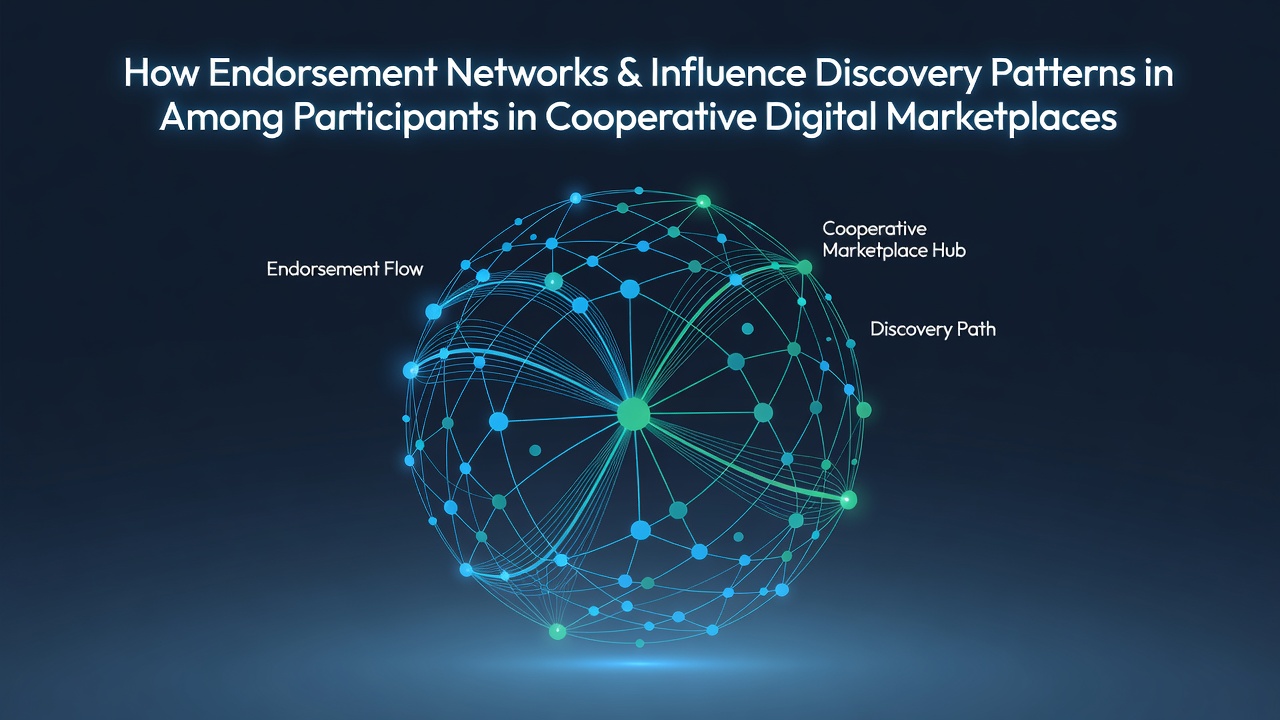
Cooperative digital marketplaces operate on shared governance models where users both contribute and consume resources, and endorsement mechanisms emerge as participants rate or vouch for products and services within the community. Researchers at institutions tracking platform dynamics have documented that these networks exhibit scale-free properties, meaning a small number of highly connected nodes receive disproportionate attention while peripheral participants rely on indirect paths to gain traction. Studies conducted across multiple European platforms reveal that endorsement chains often follow geographic or interest-based clusters, which in turn shape the order in which new listings appear to active users.
Platform operators collect endorsement data through explicit votes and implicit signals such as repeat purchases or shares, then integrate those metrics into recommendation engines. According to reports issued by the European Commission on digital market structures, such integration produces measurable shifts in exposure rates, with endorsed items showing up to threefold increases in impressions compared to non-endorsed equivalents during controlled observation periods.
Discovery Mechanisms Driven by Network Effects
Discovery patterns evolve when endorsement graphs inform algorithmic sorting, causing items backed by dense subnetworks to propagate faster through user feeds. Participants located near high-degree nodes encounter a narrower but more curated selection of offerings, whereas those on the network fringes experience slower or more random exposure to new content. Figures released by the Australian Competition and Consumer Commission in platform oversight reviews confirm that cooperative marketplaces using endorsement-weighted algorithms record elevated engagement within core clusters, yet they also note extended discovery timelines for listings originating outside established endorsement loops.
Take one analysis of a distributed cooperative platform where researchers mapped endorsement flows over twelve months. The resulting data showed that products endorsed by participants with overlapping connection histories rose in search rankings within days, while isolated endorsements produced minimal movement. This pattern held across categories ranging from digital tools to physical goods, illustrating how network proximity functions as a persistent filter on visibility.
Behavioral Patterns Among Different Participant Groups
Active endorsers tend to discover items earlier in their lifecycle because their connections trigger reciprocal signals that boost subsequent listings. Newer participants, by contrast, often navigate discovery through secondary pathways such as category browsing or external referrals until they accumulate enough endorsements to enter denser network regions. Observers tracking October 2026 platform metrics noted a temporary acceleration in cross-cluster discovery following an update to endorsement propagation rules, with previously isolated users gaining faster access to endorsed content from adjacent groups.

Longitudinal data collected by research teams at Canadian universities specializing in network science further indicate that endorsement reciprocity strengthens over time, creating feedback loops where discovered items receive additional validation and therefore maintain elevated positions. Participants who strategically build connections across multiple clusters demonstrate broader discovery horizons, accessing listings that remain hidden from more localized users.
Algorithmic Integration and Visibility Adjustments
Marketplace operators adjust weighting parameters in response to network density metrics, which alters how quickly endorsements translate into ranking changes. When systems prioritize recent endorsements within tight clusters, discovery accelerates inside those groups but slows for listings that lack similar support. Reports from the OECD on digital economy dynamics highlight that such parameter tweaks produce consistent outcomes across cooperative platforms, with visibility concentrating around established endorsement hubs while peripheral content requires sustained external promotion to break through.
October 2026 brought documented refinements to several cooperative marketplace algorithms that incorporated temporal decay factors into endorsement scores. These changes resulted in faster turnover of featured items, allowing newly endorsed products from mid-tier network positions to surface more readily than they had under previous static models.
Conclusion
Endorsement networks continue to serve as core infrastructure for discovery in cooperative digital marketplaces, channeling participant attention through measurable connection patterns and algorithmic responses. Platform data and independent analyses consistently show that proximity within these networks determines exposure speed and breadth, with clustered endorsements generating concentrated visibility and peripheral positions requiring additional bridging mechanisms. As operators refine integration methods, the resulting shifts in discovery patterns remain tied to the underlying structure of endorsements exchanged among participants.