Sage Foster · 27 September 2026
Exploring Ripple Effects of Feedback Integration on Visibility Algorithms in Distributed Online Communities
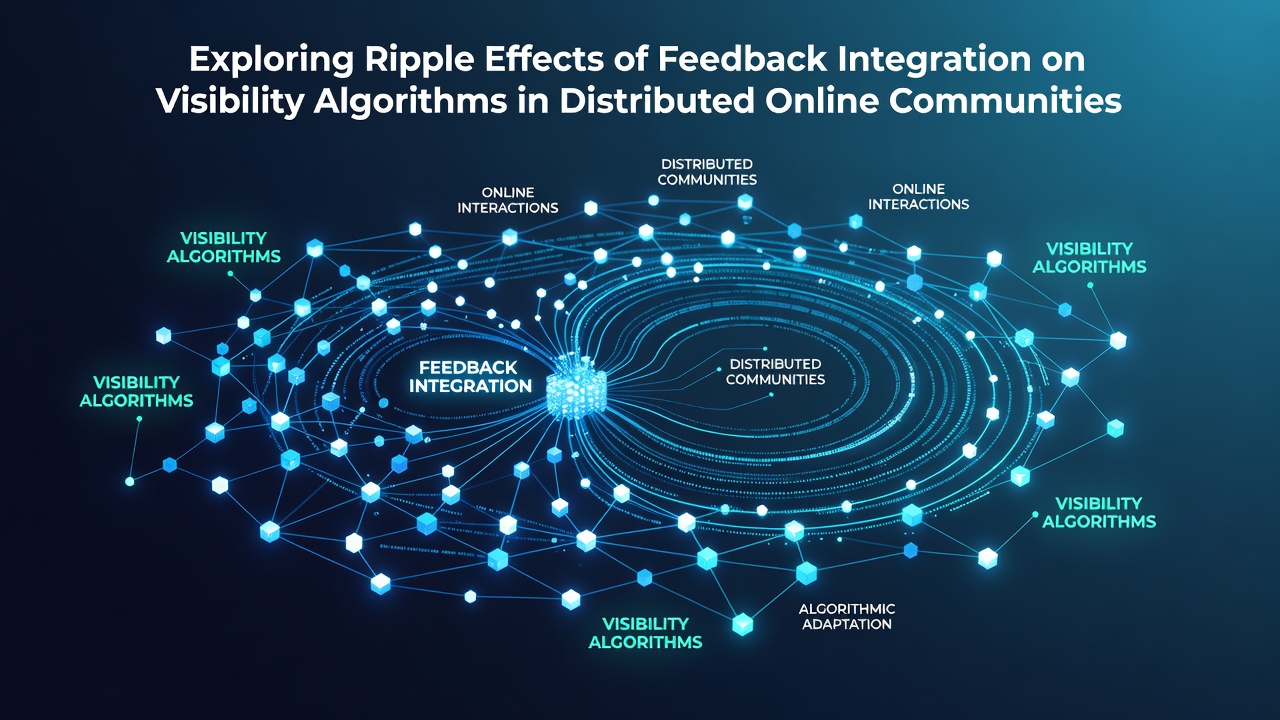
Distributed online communities rely on visibility algorithms that adjust content prominence based on integrated user feedback, and these systems produce measurable changes across multiple layers of interaction. Feedback comes from votes, comments, shares, and dwell time metrics that feed directly into ranking models, while algorithms in platforms such as federated forums and peer-to-peer networks recalibrate exposure in real time. Observers note that the process creates chains of adjustment where one user's signal alters visibility for others, and data collected from large-scale deployments shows shifts in participation patterns within weeks of implementation.
Mechanics of Feedback Integration
Feedback integration occurs when platforms collect explicit and implicit signals then route them through machine learning pipelines that update visibility scores. Researchers at institutions tracking network behavior have documented how positive signals increase node reach while negative signals reduce it, yet the same signals also influence neighboring communities because of shared protocols in distributed architectures. Studies indicate that simple upvote systems can trigger broader reordering when combined with temporal decay functions, and the resulting visibility changes propagate through connected instances rather than remaining isolated.
Algorithms often apply weighting schemes that differentiate between feedback types, and evidence from operational logs reveals that comment-based signals carry higher influence than passive views in many implementations. Those who have examined production systems find that integration layers must handle conflicting inputs from multiple communities, which leads to reconciliation steps that smooth out local discrepancies before global adjustments take effect. September 2026 saw several federated networks release updated weighting protocols that incorporated cross-instance validation, and initial measurements showed reduced volatility in content rankings following the changes.
Observed Ripple Effects Across Networks
Ripple effects appear when a visibility adjustment in one community alters engagement metrics in another, and longitudinal data sets collected over multi-year periods demonstrate consistent patterns. Content that gains rapid feedback in a primary instance tends to appear more frequently in secondary instances even when local user bases differ substantially. Analysts tracking these movements report that amplification loops can form when feedback from high-visibility nodes reinforces the original signal, while suppression effects spread when negative feedback accumulates across boundaries.
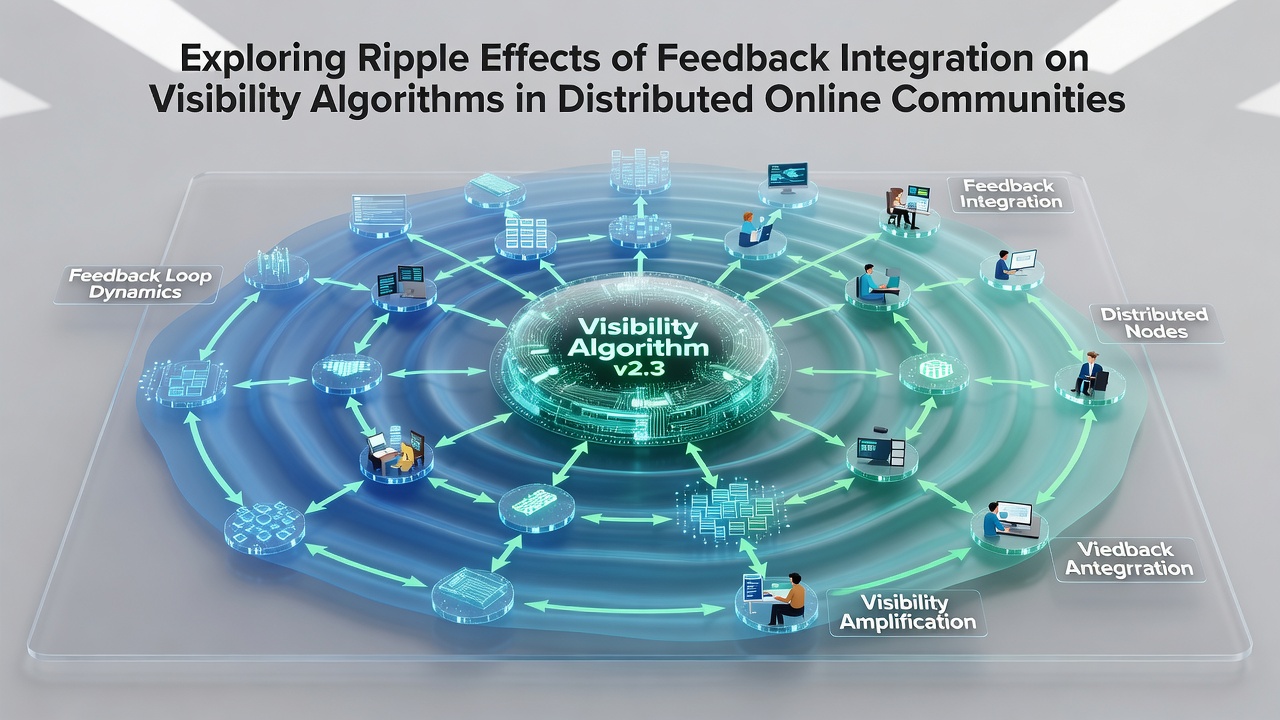
One documented case involved a specialized discussion network where the addition of threaded reply feedback caused topic clusters to migrate between instances within days. The migration occurred because algorithms treated reply depth as a quality signal and adjusted exposure accordingly, and this adjustment influenced recommendation surfaces in unrelated communities that shared the same protocol stack. Data shows participation rates rose in some clusters while declining in others, illustrating how feedback integration redistributes attention without centralized coordination.
Behavioral and Structural Consequences
User behavior adapts to perceived visibility changes, and aggregate statistics from community audits indicate that contributors modify posting frequency and content style once they recognize feedback patterns. Those monitoring these adaptations have recorded increased use of engagement-optimized phrasing in environments where comment signals dominate ranking, whereas communities relying more on share metrics display different linguistic shifts. Structural consequences include the emergence of sub-communities that deliberately limit feedback exposure to maintain stable visibility for niche topics.
Network topology itself can shift when visibility algorithms favor certain connection patterns, and research published through academic channels demonstrates that dense clusters form around high-feedback content while peripheral nodes experience reduced reach. According to findings released by the National Science Foundation, distributed systems that integrate feedback without sufficient damping mechanisms show higher rates of content concentration over successive update cycles. Australian research groups examining similar platforms have reported parallel outcomes when feedback loops interact with geographic or language-based partitioning.
Measurement Approaches and Data Sources
Researchers employ graph analysis techniques to quantify ripple magnitude, and these methods track changes in betweenness centrality and degree distribution before and after feedback updates. Metrics such as cross-instance impression ratios and feedback-to-visibility conversion rates provide quantitative views of propagation speed. Public datasets released by several federated projects allow independent verification of these measurements, and comparisons across different protocol versions reveal that tighter integration thresholds correlate with faster but narrower ripple patterns.
European regulatory reports on platform transparency have begun requiring disclosure of feedback weighting factors, and compliance documentation from multiple operators shows how these disclosures enable external analysis of ripple potential. The combination of internal logs and external audits creates a clearer picture of how feedback integration affects long-term community composition.
Conclusion
Feedback integration continues to reshape visibility algorithms in distributed online communities through interconnected adjustment mechanisms that produce measurable propagation effects. Data collected across multiple networks and time periods establishes that these effects influence both individual content reach and broader structural properties. Continued monitoring through September 2026 and beyond will supply additional records that clarify the scale and duration of observed ripples, while protocol-level refinements seek to balance responsiveness with stability across instances.