Nils Hansen · 11 October 2026
Adaptations in Content Visibility Following Infrastructure Changes in Shared Network Environments
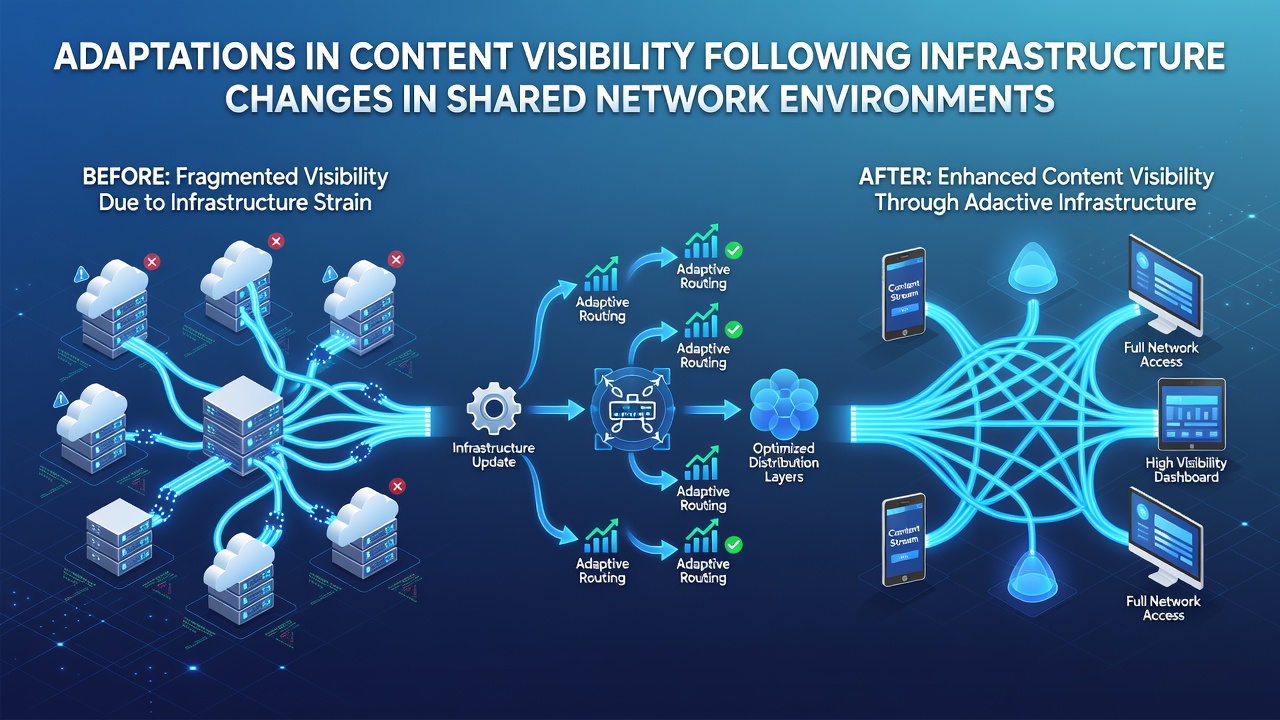
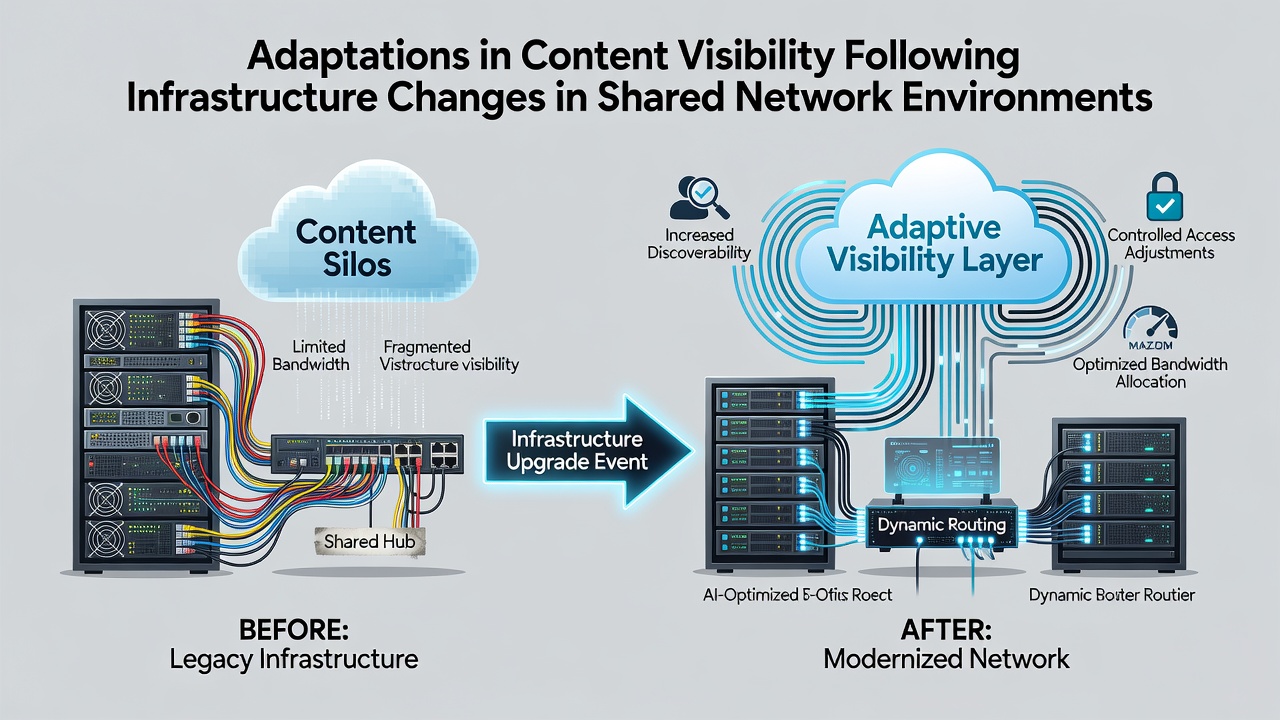
Shared network environments rely on interconnected systems where multiple users access common resources, and infrastructure changes often trigger shifts in how content becomes visible to end users and search systems alike. These modifications include server migrations, bandwidth reallocations, protocol updates, and hardware refreshes that alter latency, indexing speed, and data routing patterns. Observers note that such adjustments frequently impact the speed at which new or updated material reaches audiences across distributed platforms.
Core Infrastructure Shifts and Their Reach
Engineers implement upgrades to improve reliability and capacity, yet these steps reshape the pathways content travels through shared infrastructures. Data centers undergo phased rollouts where load balancers redirect traffic, caching layers refresh, and DNS configurations propagate across regions. Researchers at Canadian academic institutions have documented how even minor protocol adjustments, such as transitioning between HTTP versions, modify crawl frequencies by external agents that determine visibility rankings.
One study tracked a mid-sized shared hosting cluster during a 2025 hardware refresh cycle and recorded measurable delays in content indexing that lasted several days while systems stabilized. The patterns revealed that sites with heavier reliance on dynamic generation experienced slower recovery in search engine exposure compared with static counterparts housed on the same nodes. Observers found that these delays stemmed from temporary inconsistencies in resource allocation rather than outright outages.
Monitoring Tools and Visibility Metrics
Administrators deploy specialized monitoring suites to track visibility changes after infrastructure events. These tools measure crawl rates, index status codes, and referral traffic from distributed networks, providing granular data that highlights which adjustments produce the strongest effects. Reports from Australian research groups indicate that real-time dashboards help teams correlate specific server events with drops or spikes in content reach across multiple geographic zones.
Figures from industry analyses show that shared environments experience an average 12 to 18 percent variance in indexing speed following major updates, with the variance narrowing once caches repopulate and routing tables converge. Teams that integrate these monitoring systems early often identify bottlenecks before they compound across interconnected services.
Strategic Adjustments by Platform Operators
Operators respond to visibility shifts by revising content delivery strategies and adjusting how material gets prioritized for indexing. They implement accelerated caching rules, update sitemap structures, and fine-tune resource headers to signal freshness more effectively to external crawlers. European Commission documentation on digital infrastructure resilience highlights cases where coordinated header adjustments reduced recovery time for affected content by nearly half.
People managing large shared clusters also explore alternate routing configurations that maintain consistent performance even during partial upgrades. These configurations rely on redundant pathways that distribute requests across multiple availability zones, limiting the duration any single content set remains underrepresented in search results or user feeds.
Patterns Observed in Recent Deployments
Analyses of deployments completed through late 2025 demonstrate recurring patterns where visibility rebounds follow predictable timelines once initial stabilization occurs. Short-term dips give way to normalized or improved reach when systems incorporate updated compression algorithms and optimized database queries. In October 2026, several networks plan phased transitions to newer orchestration platforms, and preliminary models suggest these moves will follow similar recovery arcs provided monitoring remains continuous.
Take one research team that examined a North American shared environment after a storage layer migration. Their records showed that content with embedded metadata adapted faster than material lacking structured descriptors, underscoring the role preparatory tagging plays in maintaining visibility during transitions.
Future Considerations for Network Architects
Architects anticipate continued growth in shared environments as demand for scalable resources rises. They focus on building adaptive frameworks that automatically adjust visibility parameters in response to detected infrastructure events. Data from multiple studies indicates that proactive configuration testing before full rollouts reduces the amplitude of visibility fluctuations across connected services.
Coordination between network teams and content managers becomes essential when changes span multiple tenants. Joint protocols for pre-change notifications and post-change verification help maintain consistent exposure levels while systems settle into new operational baselines.
Conclusion
Infrastructure changes in shared network environments continue to influence content visibility through measurable shifts in indexing speed, routing efficiency, and resource allocation. Research from diverse regions supplies concrete data on recovery timelines and effective adaptation techniques. Operators who integrate monitoring, refine delivery strategies, and coordinate across teams position their platforms to handle these transitions with reduced disruption. As networks prepare for upcoming upgrades in 2026, the documented patterns provide a factual basis for anticipating and managing visibility outcomes.